


2026-01-06 00:00:00 Dalam wawancara Miller tidak ada pengakuan bahwa masing-masing negara bagian atau teritori â Greenland, misalnya â mempunyai hak berdaulat untuk menentukan nasib mereka sendiri.
Donald Trump South America Congressional news NATO See all topics Facebook Tweet Email Link Link Copied!
Follow Look out, world.
One of President Donald Trumpâs longest-serving White House aides Monday gave the clearest explanation yet of an epochal shift in Americaâs global role, as the administration charts a brazen course after decapitating Venezuelaâs regime.
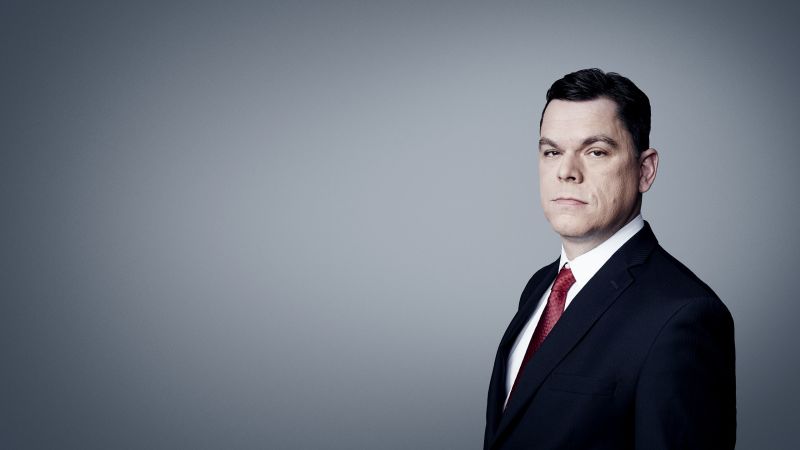
âWe live in a world in which you can talk all you want about international niceties and everything else,â deputy chief of staff Stephen Miller told Beritaâs Jake Tapper.
âBut we live in a world, in the real world ⦠that is governed by strength, that is governed by force, that is governed by power,â Miller said.
âThese are the iron laws of the world.â Any US allies still in denial after the first wild year of Trumpâs second term should listen to something else Miller said.
âWeâre a superpower.
And under President Trump, we are going to conduct ourselves as a superpower.â His comments came in the context of questions about Trumpâs claims to be running Venezuela following the daring US special forces raid that snatched President Nicolás Maduro and sent him to a Monday court hearing in New York.
Law enforcement officials move captured Venezuelan President Nicolas Maduro and his wife Cilia Flores, second from left, out of the helicopter in New York on January 5.
Adam Gray/Reuters They also followed warnings by Trump on Sunday of possible fresh action against other nations.
He specifically threatened Colombia; he also said Mexico needed to âget their act together.â Trump also recently pledged that Iran would âget hit very hardâ if it killed protesters.
As always, with Trumpâs administration, itâs necessary to carefully weigh volatile rhetoric often aimed at provoking critics or pleasing base voters.
And Miller rivals the president with his explosive statements.
But this is no longer just about words.
Itâs about actions.
Big questions emerging after Maduro raid Trump justified the swoop against Maduro by portraying him as the pinnacle of a massive drug cartel and his country as a multipronged threat to the US.
As a democratically elected president, Trump has wide latitude over foreign policy â and nothing but contempt for the idea that Congress has any oversight role.
Millions of people would be better off without Maduro if Venezuela transitions to a democracy.
And millions of refugees could go home.
But the White Houseâs aggressive strategy in Venezuela â not to mention its apparent intent to empower remnants of the regime and not rightful democratic leaders â raises profound questions.
So does its defiant refusal to seek congressional authorization for an apparent act of war in seizing a foreign leader and breaching Venezuelan sovereignty in an operation that officials say involved nearly 200 US personnel on the ground and a fierce firefight.
These questions include: ⺠Does Trump have a viable plan for Venezuela after the ouster of Maduro â a reviled dictator who ran his country into the ground?
⺠How can US military and diplomatic resources keep up with the pace of Trumpâs fast-expanding ambitions to control the Western Hemisphere?
⺠Does the administration plan further military incursions into Venezuela?
Miller, for example, spoke of an âongoingâ military operation on Monday.
⺠And how much is this all going to cost American taxpayers?
Itâs questionable whether a president who is struggling to manage his own nation â where his approval rating has dipped below 40% and voters are angry about high prices â can ârunâ another country.
For the same reasons, Trumpâs bellicose threats to bring multiple other nations into line also seem questionable.
Such questions ought to interest Congress.
Yet, Republican leaders of the House and Senate majorities fell in line behind the administrationâs stance that a raid deep into Venezuelan territory was a mere law enforcement mission that did not require constitutional authorization.
Senate Republican Majority Leader John Thune offered the most surprising example of Congressâ reluctance to oversee a president when he told Beritaâs Manu Raju that advising top congressional leaders of the raid in advance would have been âill-advisedâ since Congress is ânot the best at keeping secrets.â Who is really running Venezuela?
In a literal sense, Trump is not running Venezuela.
The Maduro raid left in place the vicious machinery of security services and henchmen that maintained years of iron fist repression.
The US presidentâs words either suggest delusion or symbolize his claim that a US naval armada offshore means he can impose his will on the countryâs acting President Delcy RodrÃguez.
The demonstrated might of the US military could be coercive.
But RodrÃguez faces a more local threat: the hardline Venezuelan government ministers who maintain the criminal gangs and militia that theyâve used to enrich and empower themselves for years.
But Millerâs bullishness epitomizes an ebullient administration casting around for new targets.
And Trump is developing an appetite for spectacular military action that delivers big headlines but avoids the boots on the ground quagmires.
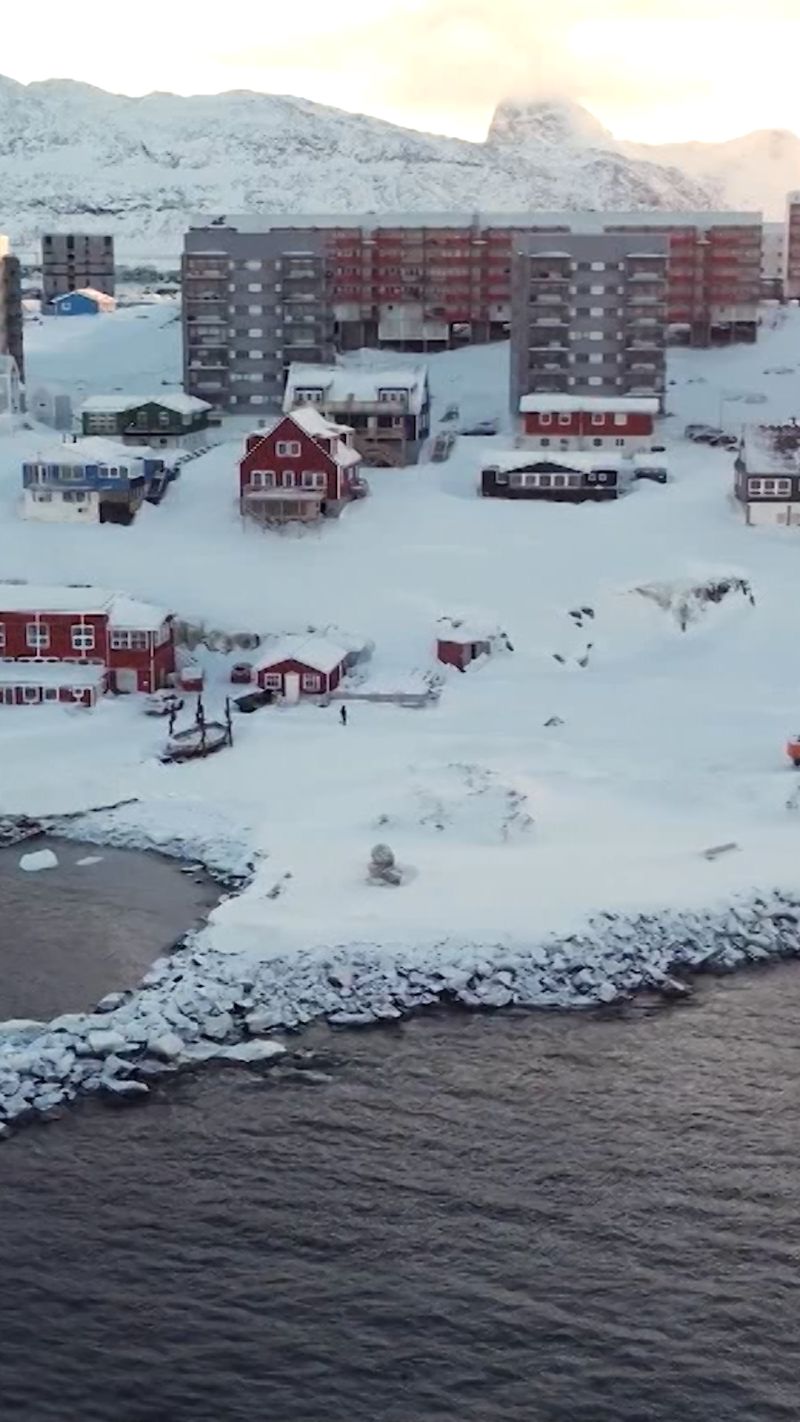
Thatâs where Greenland comes in.
Since the Venezuela raid, Trump has again insisted that the autonomous Danish territory is vital for US national security.
Miller implied that the US could co-opt it simply because it it is strong and Denmark is weaker, even though any operation to seize Greenland would be an implicit and unprecedented attack on a fellow NATO member.
âThe United States is the power of NATO.
For the United States to secure the Arctic region, to protect and defend NATO and NATO interests, obviously, Greenland should be part of the United States,â Miller told Tapper.
Greenland has always been a strategic jewel.
It sits atop Atlantic shipping lanes.
And as the polar ice caps melt, itâs becoming a theater of superpower competition among the US, Russia and China.
In a sense, Miller is correct when he told Berita ânobody is going to fight the United States over the future of Greenland.â The US could fly in a division of troops and face no resistance.
But it wouldnât be necessary.
The island could easily be reinforced because Denmark is a NATO member and is covered by the allianceâs mutual defense guarantee.
Denmark and the US already have an agreement granting Washington extensive access.
In fact, thereâs already a US military base there, which Vice President JD Vance visited last year.
US Vice President JD Vance (2R) and Second Lady Usha Vance (2L) tour the US military's Pituffik Space Base in Greenland on March 28, 2025.
Jim Watson/AFP/Getty Images But itâs clear that a president who craves wins, acquisitions and surveying his own legacy in real time isnât much interested in a beefed-up NATO mission.
And thereâs another potential reason for his interest.
The administration has put a new struggle for rare earth minerals at the center of its foreign policy from Ukraine to Australia.
Under Greenlandâs frozen soil lie deposits of critical elements vital to the defense and tech industries.
Millerâs message was reinforced with an extraordinary social media post by the State Department on Monday showing a grim-faced Trump and the words âThis is Our Hemisphere.â But the idea the US will use its might more overtly and solely in its own interests is not new.
It underpinned Trumpâs first address to the United Nations in his first term in 2017.
He stressed the concept of individual national sovereignty of states in an implicit rejection of multilateral organizations and international laws.
âI will defend Americaâs interests above all else,â he said.
In the second term, Trump is defining Americaâs interests even more expansively.
Nowhere in Millerâs interview was there any acknowledgment that individual nation states or territories â Greenland, for instance â have a sovereign right to decide their own destinies.
Nor that international law, developed to avoid a repeat of cataclysmic 20th-century wars, can ever limit the United States.
How Trump is fundamentally changing Americaâs global role By implication, Millerâs rhetoric rejected the foundations of 80 years of American postwar leadership.
The Westâs founding documents â like the Atlantic Charter signed between President Franklin Roosevelt and British Prime Minister Winston Churchill in a wartime conference in Placentia Bay, Newfoundland â rejected the notion that big, powerful nations could impose their will on smaller ones.
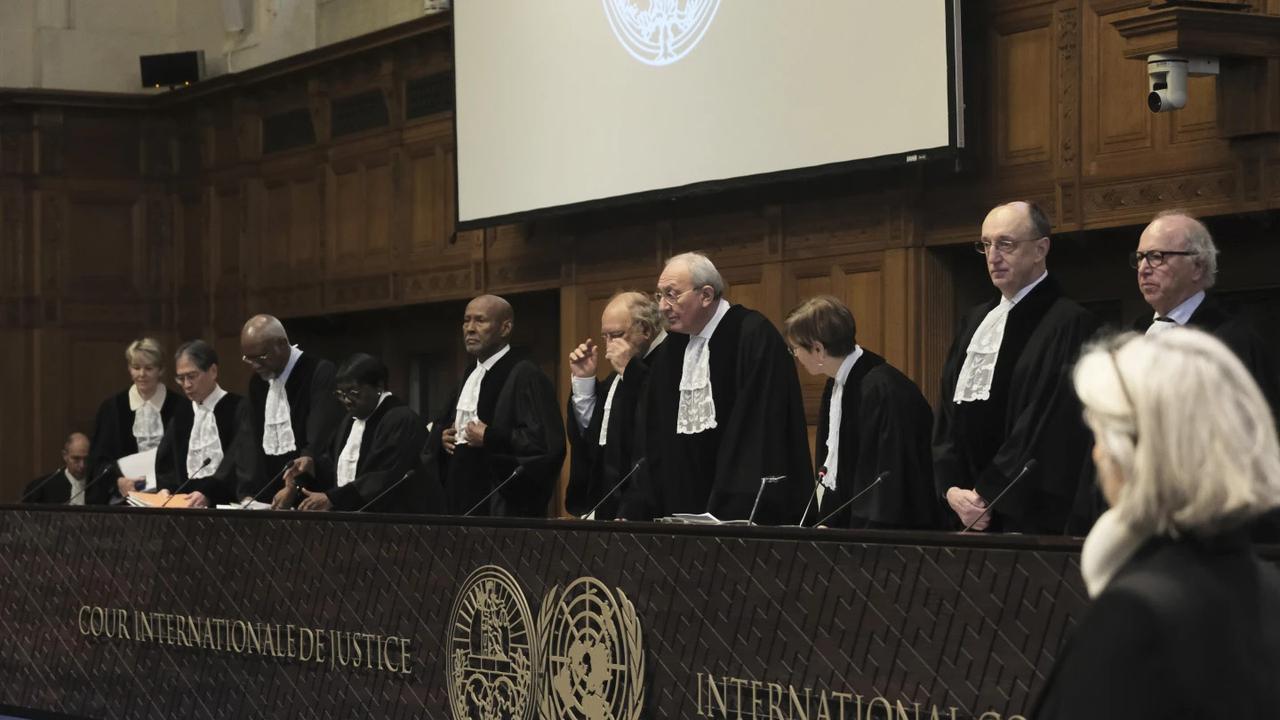
These principles are also the bedrock of the UNâs founding documents and NATOâs collective alliance.
This is why so many American policymakers on each side of the aisle worry about any peace deal in Ukraine that rewards Russiaâs attempt to obliterate Ukraine.
The longer Trump is in office, the wider become his differences with his postwar predecessors.
He seems better matched for a previous age of equally authentic US presidents who wielded tariffs and snapped up new territory in the 19th century.
Vermont independent Sen.
Bernie Sanders was asked by Beritaâs Tapper to comment on Millerâs statements that the Venezuelan government now needed Americaâs permission to conduct commerce and other business.
âMr.
Miller gave a very good definition of imperialism,â Sanders said.
âWe are powerful.
We have the strongest military on Earth, and we can run any country we want,â he said, paraphrasing Millerâs argument.
But, Sanders said, âIs that really the kind of America that our people want?
I donât think so.â Thereâs no doubt Trumpâs strongman act delights his supporters.
But is this widening thirst for global power what voters really wanted in 2024?
Americans will get their first chance to weigh in on this question in Novemberâs midterm elections.
But by the time the 2028 election to choose Trumpâs successor rolls around, the world may have changed beyond recognition.
Donald Trump South America Congressional news NATO See all topics Facebook Tweet Email Link Link Copied!
Follow